 BlastTex
 / Concrete shot blasting
Concrete Shot Blasting to the Profile Your Coating Calls For
One dry pass cleans the concrete, removes old sealers, paint and thin coatings, and leaves the texture your coating needs to bond. No acid. No water. HEPA dust collection on every machine. Based in Hurst, serving Dallas-Fort Worth and Texas.
Written by Chris Hoover, owner of BlastTex, with more than 15 years of concrete shot blasting experience. Updated October 2026.
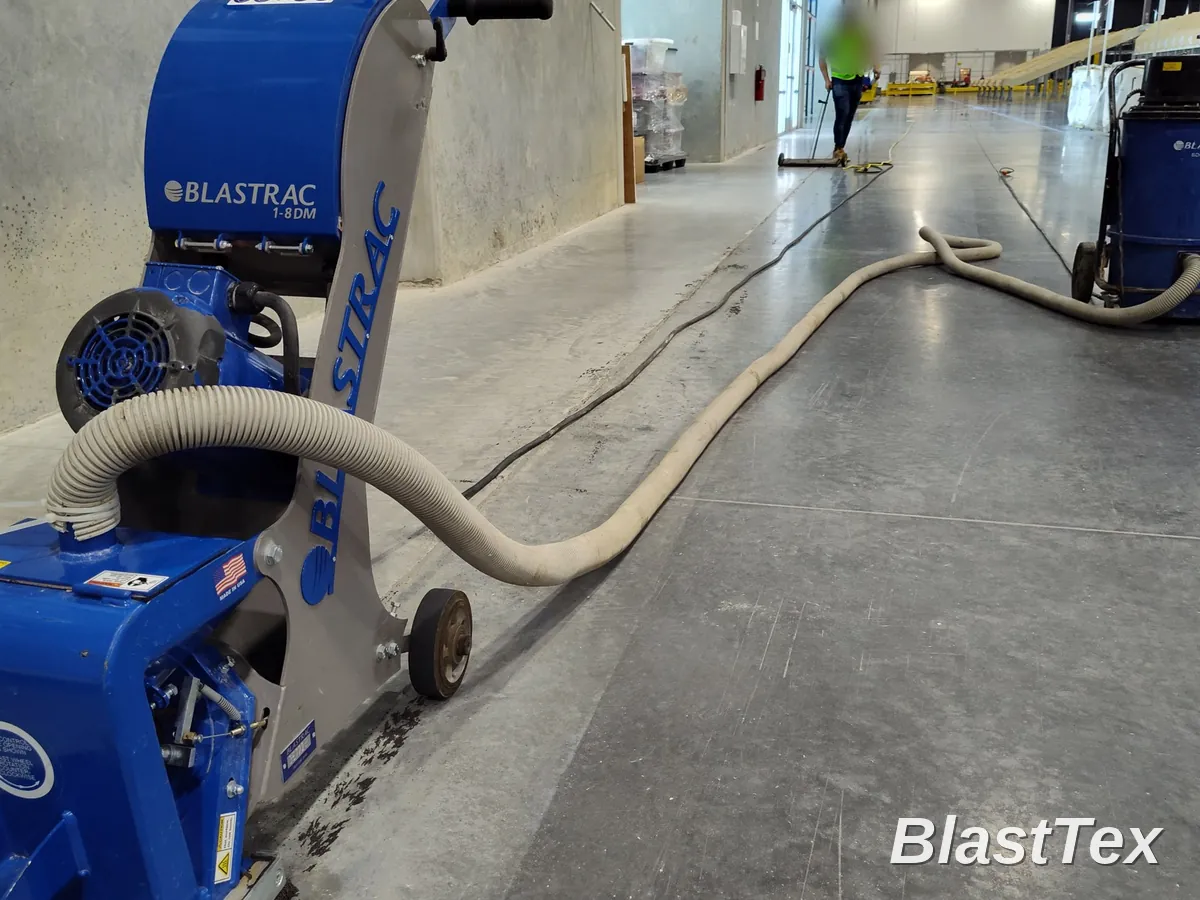
The Coating-Ready Floor package
- Shot blasted to the specified CSP on your product data sheet, with a test area when needed and the finished profile checked against ICRI reference chips
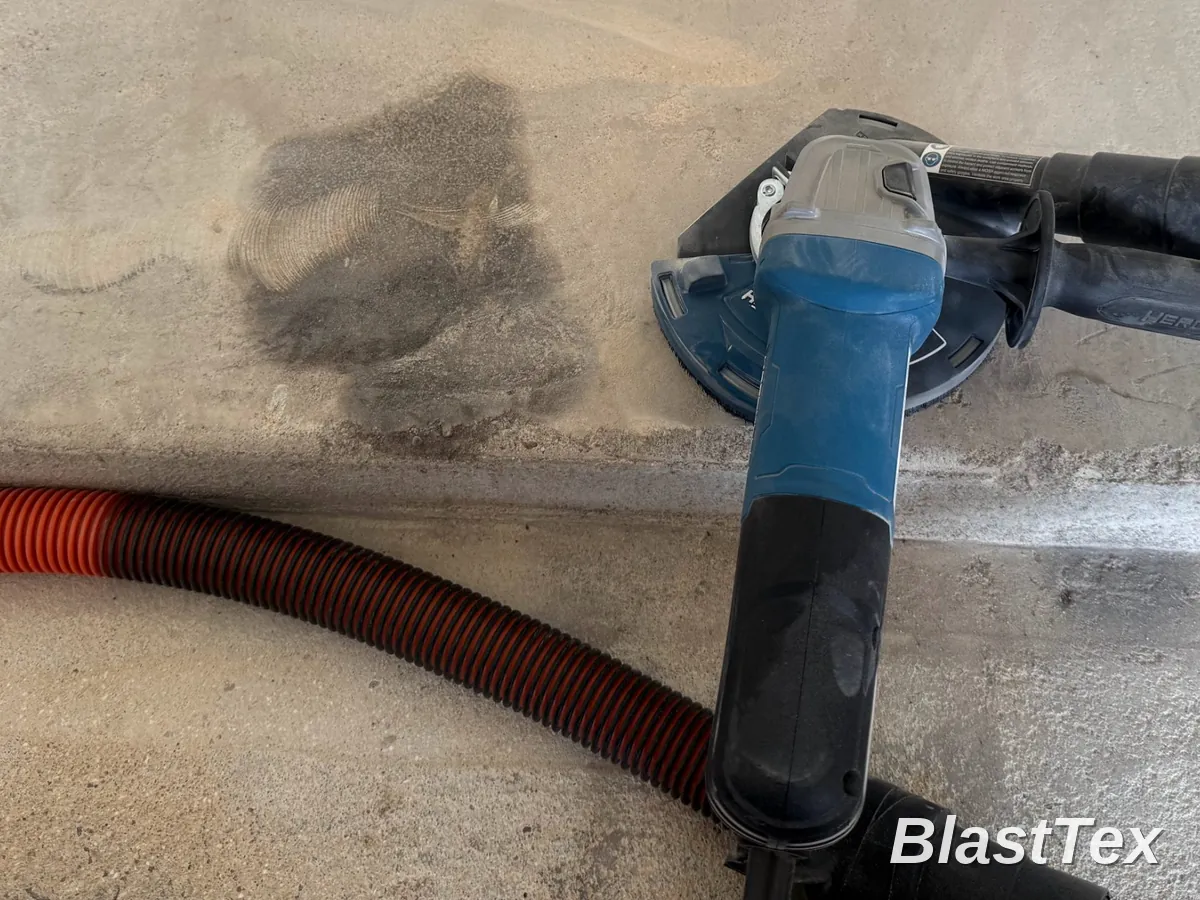
- Edges and corners ground with a dust-shrouded grinder
- Old sealers, paint, striping and thin coatings removed in the same pass
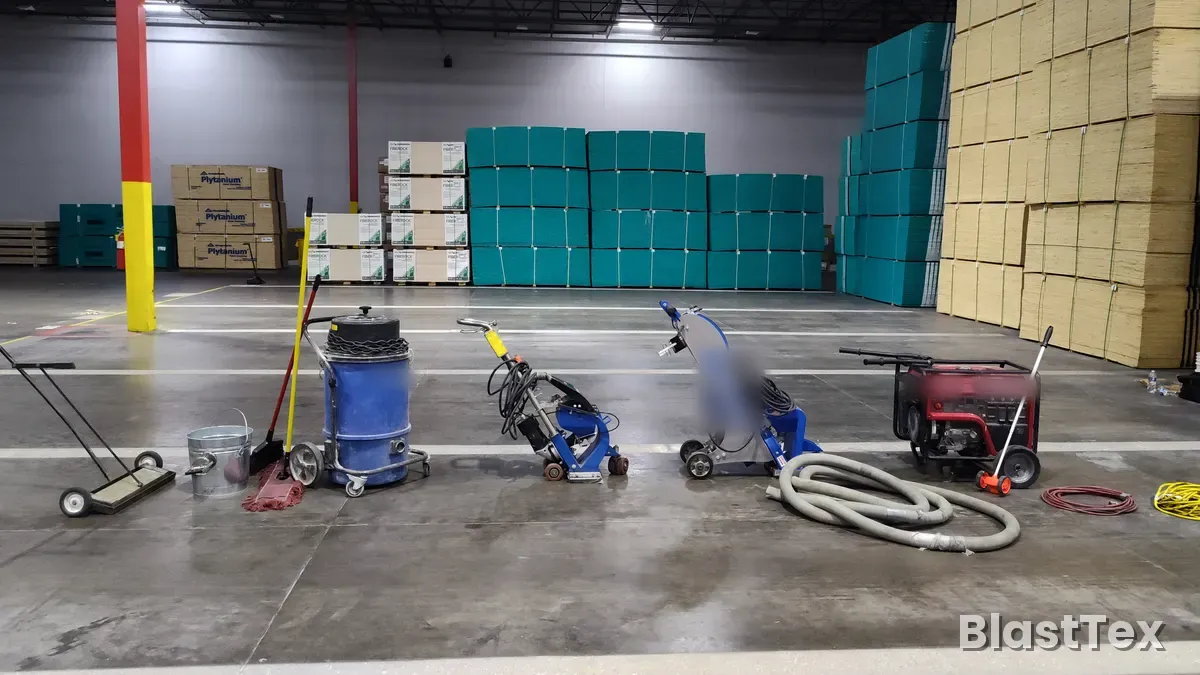
- Company-owned generator, HEPA dust collection and steel shot
- Swept and cleaned up at completion
- Time-Stamped Photo Report: before, during and after
- Nights, weekends and phased work around your operation
Includes mobilization within 50 miles of Hurst. Larger floors are quoted by the square foot.
Why coatings fail, and how to prevent it
Epoxy, polyaspartic, polyurea, overlays, and new markings only hold as well as the concrete beneath them. Epoxy prep is where a floor coating succeeds or fails.
Most coating failures start beneath the coating: a sealer left in place, a surface too smooth to bond, or acid-etch preparation that fell short. Coating makers commonly call for mechanical preparation like shot blasting because it removes what acid cannot and leaves a consistent profile.
BlastTex does not sell or install coatings. Our job is to deliver the agreed preparation so the next phase succeeds.
Built for large floors and tight spots. Our walk-behind blasters cut an 8-inch path and suit garages, edges and tight areas. On large open floors, our Blastrac ride-on shot blaster is rated at about 1,300–1,500 square feet per hour under the right conditions. Production always depends on the condition of the floor, the layout of the project, obstacles, the coating being removed and the profile required.
What shot blasting does, and what it does not
We set clear expectations before any work begins. Every floor is different, and photos let us tell you what to expect.
Well suited for
- Thin coatings, paint, and old striping
- Weak, dusty, or sealed surface layers
- Surface dirt and tire marks
- Creating the texture (CSP) your coating needs
May take more than one pass
- Thick, flexible, or heavily bonded coatings
- Deeply embedded oil, grease, and stains
- Mastic and carpet glue (asbestos test required first)
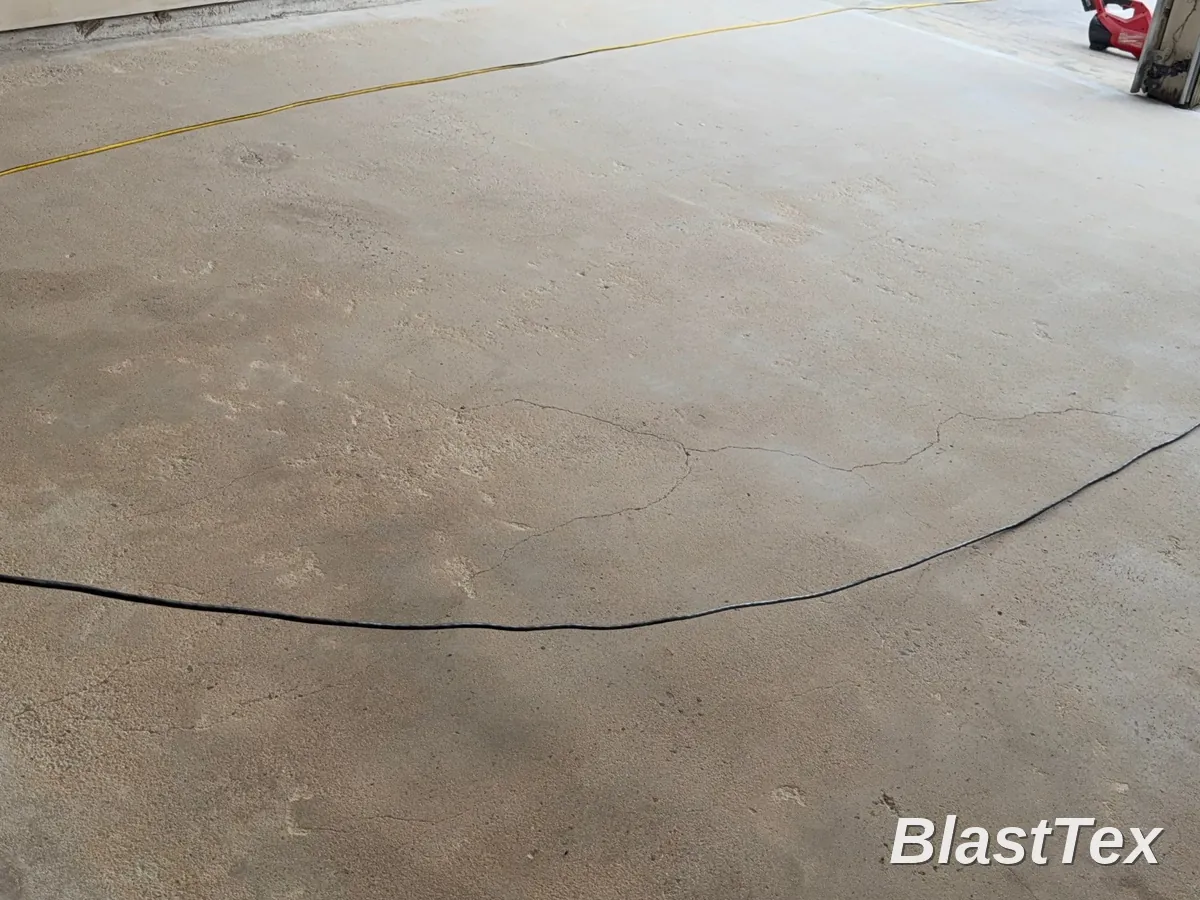
Shot blasting removes material at or near the surface. It is a dry process with no chemicals or wastewater, and dust is captured as we work, although no preparation method is completely dust-free. Blasting also reveals old patches, cracks and stains that were hidden under a coating; we point them out so they can be repaired before coating. Coating sales and installation, crack and joint repair, moisture testing and final acceptance stay with your installer.
What shot-blasted concrete looks like
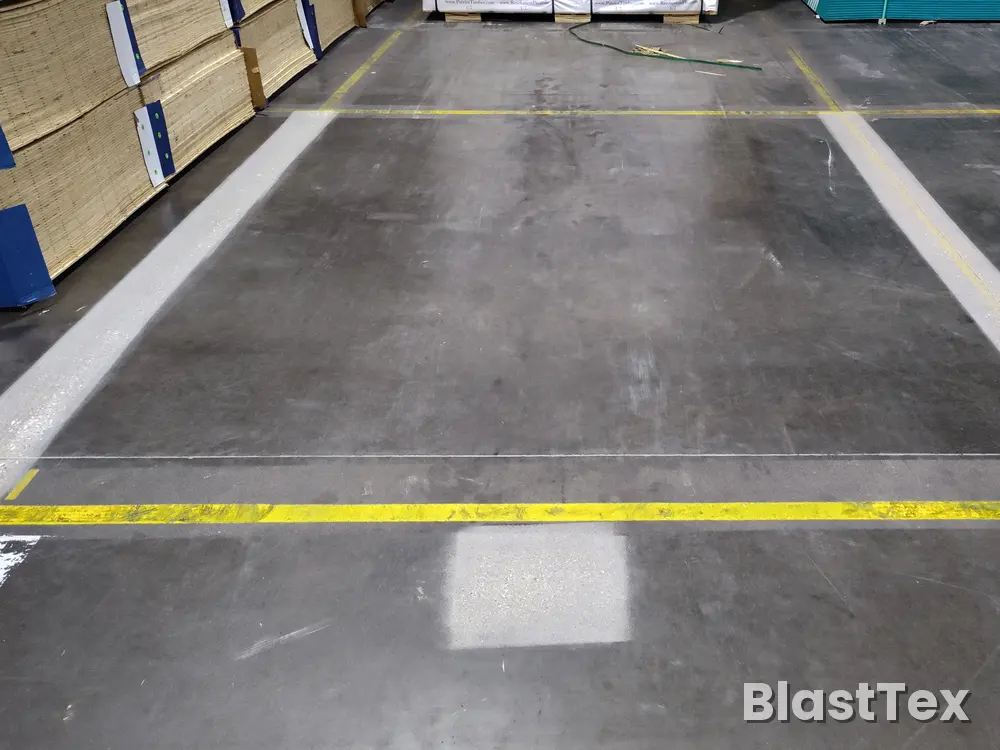
A preparation finish, not a decorative one. After shot blasting, concrete looks clean, dull, and evenly textured, not smooth, glossy, or polished. That texture gives coatings, overlays, and repair materials something to grip.
The goal is the right Concrete Surface Profile (CSP) for what goes on next. Because no slab is uniform, blasting can also reveal patches, old repairs, staining, aggregate, or line shadows that were already there.
What affects the finished look?
- Concrete age, strength, and porosity
- Coatings, paint, sealers, striping, adhesive, oil, or grease on the surface
- Cracks, patches, pitting, spalls, and old repairs
- Steel-shot size, machine settings, number of passes, and travel speed
- The required CSP or project specification
- Edges, joints, walls, columns, drains, and access
What a properly prepared surface should not be
- Smooth, polished, glossy, or sealed
- Covered with loose debris or weak surface material
- Left with loose or failing coating still on it
- Gouged or damaged beyond the agreed scope
- Assumed ready for every coating without checking the manufacturer's requirements
Why the right CSP matters
Too little profile can reduce the bond for the new system. Too much can leave texture a thin coating isn't designed to fill. The coating manufacturer, installer, or project specification should name the required CSP, and we prepare the concrete to that requirement when it's provided.
Benefits of shot blasting
- Creates a mechanical profile for coatings, overlays, and repair materials to bond to
- Removes laitance, weak surface paste, thin coatings, paint, sealers, and striping
- Efficient on large, open floors like warehouses, plants, and parking decks
- A mechanical method that can reduce the need for chemical strippers on suitable jobs
- Recovers steel shot and collects dust as it works (no prep method is completely dust-free)
- Reveals the true condition of the slab before the next system goes down
How shot blasting works
A shot blaster is a self-contained machine. It throws steel shot at the floor, recovers the shot, and sends the dust to a collector, all in the same pass.
- Shot is thrown at the floorA spinning blast wheel throws small steel shot down onto the concrete inside an enclosed blast chamber.
- The surface is opened upThe impact removes thin coatings, sealers, striping and weak surface paste, and leaves an even texture.
- The shot is recycledShot and debris rebound into a separator. Reusable shot returns to the wheel; dust and fine debris go to the collector.
- Dust is capturedA HEPA-filtered dust extractor runs with every machine to keep airborne dust low. No preparation method is completely dust-free.
Shot size, machine settings and travel speed are adjusted to reach the profile your coating requires. Edges and corners the blaster cannot reach are ground with a dust-shrouded grinder.
Which surface profile does your coating need?
The International Concrete Repair Institute (ICRI) Technical Guideline 310.2R describes ten Concrete Surface Profiles, from CSP 1 (nearly flat) to CSP 10 (very rough). Coating manufacturers use this scale to specify preparation. The ranges below are general planning guidance; your product data sheet or project specification sets the requirement, and that is what we prepare to.
| What goes on the floor | Common profile range | Typical preparation |
|---|---|---|
| Penetrating sealers and densifiers | CSP 1–3 | Grinding or a light shot blast |
| Thin-film coatings and floor paints | CSP 2–3 | Grinding or a light shot blast |
| High-build epoxy, urethane and polyaspartic systems | CSP 3–5 | Shot blasting |
| Self-leveling toppings and polymer overlays | CSP 4–6 | Medium to heavy shot blast |
| Concrete overlays and repair mortars | CSP 5 and up | Heavy shot blast or scarifying |
We check the finished profile against ICRI concrete surface profile chips. Send the product data sheet with your photos. If no profile is specified, we will tell you so and recommend confirming it with your installer or the manufacturer before prep day.
Shot blasting compared with other preparation methods
Each method has a place. We recommend the one that fits your floor and your coating, including when that is not shot blasting.
| Shot blasting | Diamond grinding | Scarifying | Acid etching | |
|---|---|---|---|---|
| How it works | Recycled steel shot strikes and opens the surface | Rotating diamond tooling abrades the surface | Rotating cutters chip into the surface | Diluted acid reacts with the top of the slab |
| Typical profile | Light to heavy, set by machine and shot | Lower profiles | Heavy | Very light |
| Best for | Large open floors, thin coatings, striping, prep for high-build systems | Edges and corners, smoothing high spots, sealer and thin-film prep | Thick coatings, ramps, deep texture | Light residential work, only where the coating maker allows it |
| Limitations | Cannot reach edges; uneven passes can leave tracking marks | Slower on large or hard floors and thick coatings | Leaves a rough surface that may need a topping | Does not remove sealers, curing compounds or oil |
| Waste | Dry; dust to a HEPA collector | Dry with a HEPA vacuum | Dry with dust collection | Wastewater that must be neutralized and handled |
BlastTex provides shot blasting, edge grinding and scarifying. We do not acid etch.
Garage floors & driveways
Planning epoxy? Garage floor preparation is our most common homeowner project. We prepare the slab so the coating bonds to clean, profiled concrete. $1,500 covers up to 400 sq ft, a typical 2-car garage or driveway.
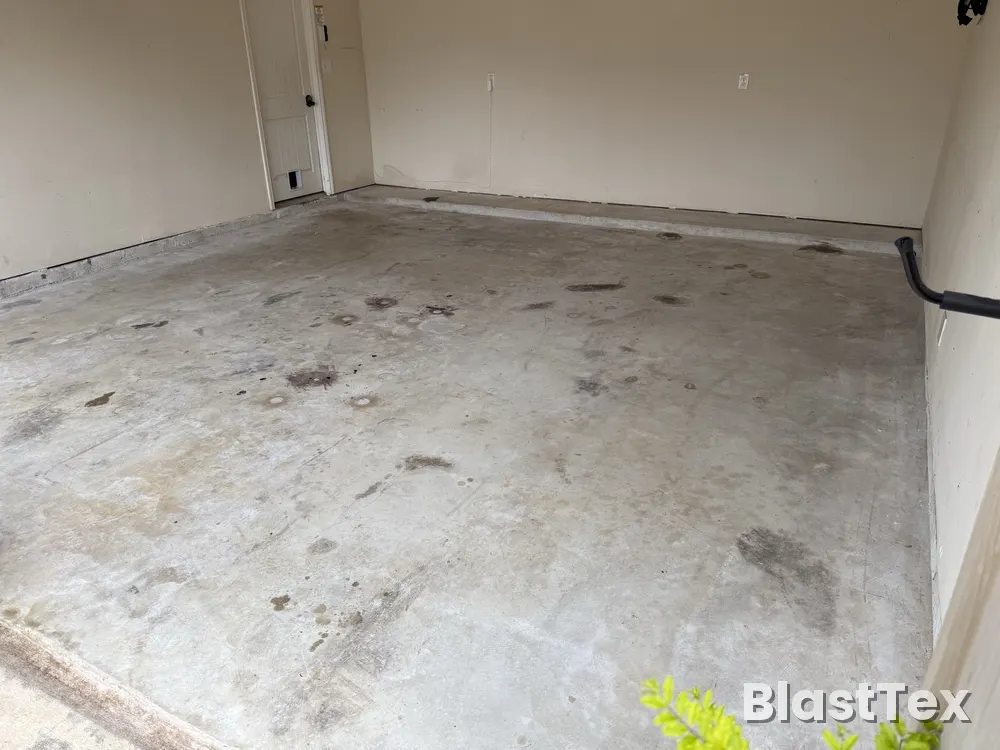
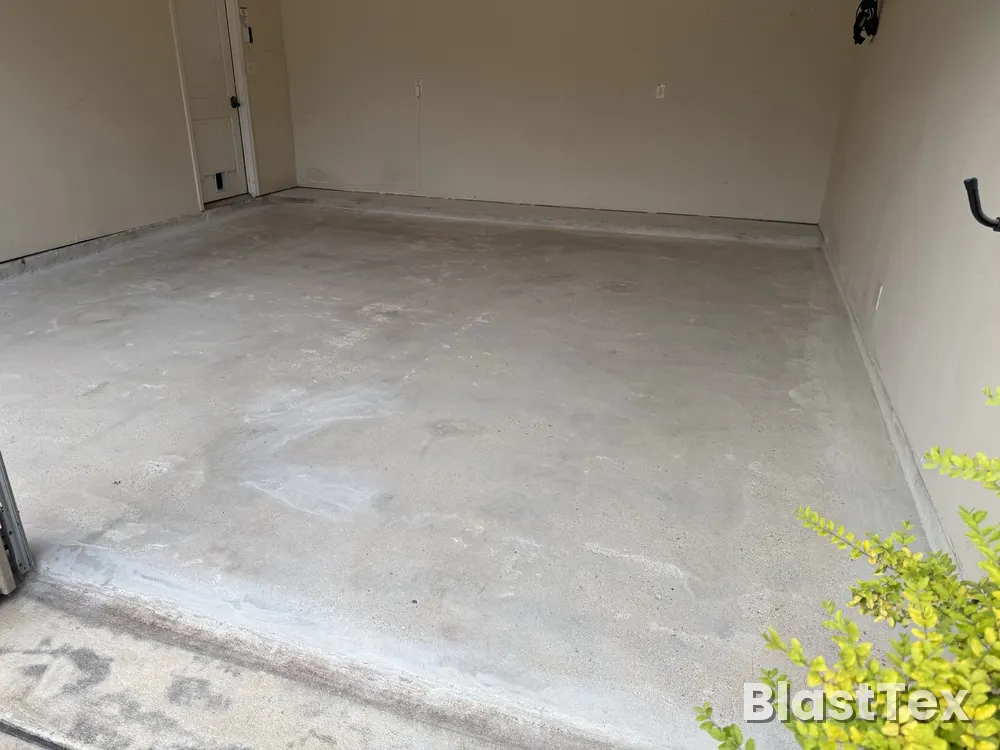 BeforeAfter
Pearland, TX: 2-car garage, 400 sq ft, CSP 3. Oil-stained slab shot blasted to a CSP 3 profile for epoxy. Drag to compare.
“Chris did a great job shot blasting my garage floor and preparing it for epoxy flooring. Very professional, great communications and traveled 5 hours to do the job. He has my highest recommendation.”James, Pearland, TX
Garage & driveway prices and homeowner questions →
Planning a garage, shop or warehouse floor? Request a written proposal →
Shot blasting pricing
Commercial shot blasting
$2,500 minimumCovers mobilization within 50 miles of Hurst, the blaster, HEPA dust collection, steel shot, setup, and cleanup.
Residential garages & driveways
From $1,500Up to 400 sq ft, a typical 2-car garage, including edge profiling and grinding along walls and corners, and mobilization within 50 miles of Hurst. Outside 50 miles, the zone travel fee is added. Larger garages and driveways are quoted from your photos.
Minimums include mobilization within 50 miles of Hurst (76053). Projects farther away add the travel fee for their zone.
What affects your price
- Location and travel
- Square footage and floor layout
- What's on the floor: coatings, striping, adhesive, oil, or grease
- Required surface profile (CSP) and detail work at edges, columns, and drains
- Access, power, and scheduling: nights, weekends, phased work, or active facilities
Shot blasting questions
Do you repair cracks?
Not at this time. Crack and joint repair is handled by your coating installer or a concrete contractor. Shot blasting first exposes the cracks and gives the repair material a clean surface to bond to, and we’ll point out any cracks we see.
What is concrete shot blasting?
Concrete shot blasting is a mechanical surface-preparation process that propels small steel shot at the concrete surface and immediately recovers the shot, dust and removed material through an integrated vacuum system.
The process removes surface contaminants and creates a clean, textured concrete profile without the use of chemicals.
Is shot blasting dusty?
Shot blasting equipment is designed to operate with industrial dust collection, capturing the majority of generated dust and debris during the preparation process.
No concrete preparation process should be described as completely dust-free, but properly operated shot-blasting equipment with dust collection is far cleaner than prep methods that don't collect dust as they work.
Do you use chemicals or water when shot blasting?
Typically, neither.
Shot blasting is a dry mechanical preparation process, which means there is generally no chemical stripping and no wastewater created by the shot-blasting process itself.
That also means the prepared surface can often move quickly into the next stage of the project.
What is the difference between shot blasting and grinding?
Shot blasting uses steel shot to clean and texture concrete. It's efficient on large, open floors that need a specified profile for a coating or overlay.
Grinding uses diamond tooling. It's better suited to edges, tight areas, and smoothing or leveling. We use shrouded edge grinding where the blaster can't reach. The right method depends on your floor and what goes on it next.
What is a CSP?
CSP stands for Concrete Surface Profile.
Concrete profiles range from relatively smooth to increasingly aggressive textures. The correct CSP depends on the coating, overlay or flooring system being installed.
BlastTex can prepare concrete to the specified profile when project requirements are provided.
Can you prepare concrete for epoxy, polyaspartic, urethane, overlays, or repair materials?
Yes, when the manufacturer's requirements or project specification are provided. Product selection, moisture testing, installation, warranty, and final acceptance stay with the manufacturer, installer, and owner.
Do you work as a prep subcontractor for epoxy and coating installers?
Yes. Epoxy, polyaspartic, and polyurea installers, striping contractors, and general contractors hire us to handle the concrete prep. Send the spec or product data sheet with the required CSP and we prep to it.
We work ahead of your crew, including nights and weekends, and we never sell or install coatings, so the client relationship remains yours.
How do I prep my garage floor for epoxy?
Empty the garage, then the slab needs to be clean, dry, and profiled. That means old sealers, paint, and peeling coating removed and the surface opened up to the texture, or CSP, your coating’s instructions call for.
Store-bought kits often say to acid etch. Etching leaves a shallow profile and can’t remove curing compounds or oil, and leading coating makers recommend mechanical prep like shot blasting instead. We shot blast and grind the edges for $1,500 for up to 400 sq ft within 50 miles of Hurst.
Why does garage floor epoxy peel?
The two most common reasons are improper floor prep and coating concrete that isn’t fully dry.
Improper prep. Epoxy needs clean, textured concrete to grip. Dust, oil, old sealers, curing compounds, and smooth, weak surface paste all get in the way. Acid etching from a store-bought kit leaves only a shallow profile and can’t remove curing compounds or oily deposits, which is why leading coating makers recommend mechanical prep like shot blasting instead.
Coating too soon after rain. After a rain, concrete can look dry on top and still be holding water inside. Rain blowing or running into the garage, water dripping off cars, and moisture coming up through the slab all add to it. Water between the slab and the coating weakens the bond, and the epoxy can blister or peel later even if it seemed to cure fine. Give the slab time to dry out completely, and follow your coating maker’s moisture guidelines before it goes down.
What about “hot tire pickup”? That’s when warm tires lift the coating as you pull out. It’s mostly a coating problem: thin, low-solids or water-based epoxy kits soften under hot tires. A weak bond from poor prep makes it worse. Ask your installer about a coating rated for hot tires, and we’ll make sure the concrete under it is ready.
Will shot blasting remove stains and contamination?
Shot blasting can remove topical layers. Deeply embedded stains and contamination may need extra passes or another method, and some may never fully come out.
Send photos and we will tell you what to expect before we start.
Can shot blasting remove oil stains from a garage or driveway?
It can remove contaminated surface material and profile the concrete, but it isn't a guaranteed stain remover for oil that has soaked deep into the slab. If you're coating afterward, the coating manufacturer's contamination and prep requirements should be reviewed before we start.
What if the concrete is worse than it looks?
Cracks, pitting, patches, failed repairs, weak concrete, and hidden coating layers sometimes don't show until prep begins. If what we find differs from the approved scope, we'll stop, show you, and price the added work on a written change order before doing anything beyond it.
How much does concrete shot blasting cost?
There isn't one responsible price per square foot for every floor. Square footage, required CSP, existing coatings, floor condition, number of passes, access, obstacles, edge work, travel, and scheduling all play a part, so we look at the actual project first.
Starting points: commercial shot blasting and surface prep $2,500 minimum; residential garage floors and driveways from $1,500 (up to 400 sq ft). Minimums include mobilization within 50 miles of Hurst (76053).
Not sure what your floor needs?
Send photos for an assessment. Include the project location, approximate square footage, what is on the floor now and what you plan to install. If you have the coating manufacturer’s surface preparation spec, send that too.