 BlastTex
 / Concrete prep guide
Before You Coat That Concrete: 6 Things to Check First
Written by Chris Hoover, owner of BlastTex, with more than 15 years of concrete shot blasting experience. Updated October 2026.
Most coating failures start before the coating goes down. Peeling, bubbling, and flaking usually trace back to a slab that was dirty, sealed, damp, or too smooth to grip. Here is what to check first, whether you are coating a garage or a warehouse.
Want this as a one-page checklist? Download it free →
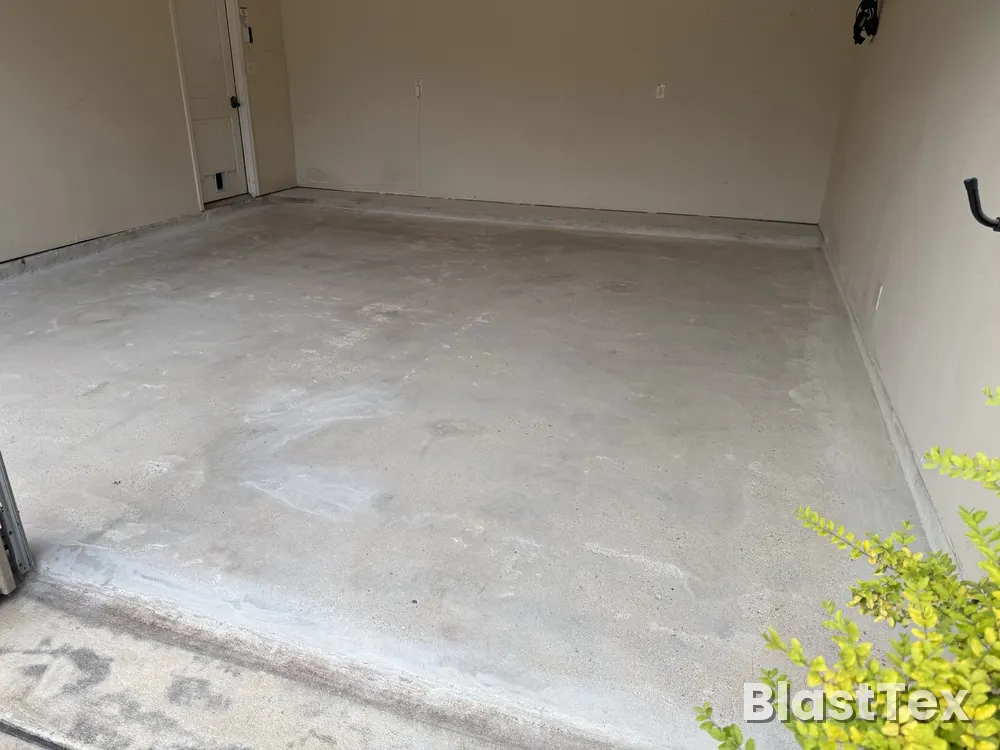
1. Is there already something on the concrete?
Drip a little water on the floor in a few spots. If it soaks in and darkens the concrete within a few minutes, the surface is probably open. If it beads up or sits on top, there is likely a sealer, coating, or contamination that will keep a new coating from bonding.
Old epoxy, paint, sealers, and curing compounds have to come off. Coating over them means your new coating is only as strong as the old one underneath.
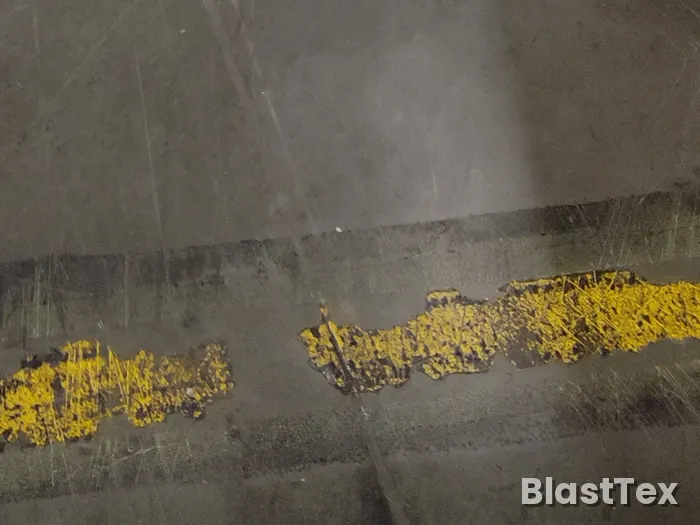
Old adhesive or black mastic? Test it first. Older black mastic and some older floor adhesives can contain asbestos. Before we remove them, we require a written test result from a Texas-licensed asbestos inspector showing the material is clear. Without one, BlastTex will not remove it.
2. Does the slab have the right profile?
Coatings need texture to grip. The industry measures it with the Concrete Surface Profile scale (CSP 1 to 10) from the International Concrete Repair Institute. CSP 1 is nearly smooth. Higher numbers are rougher.
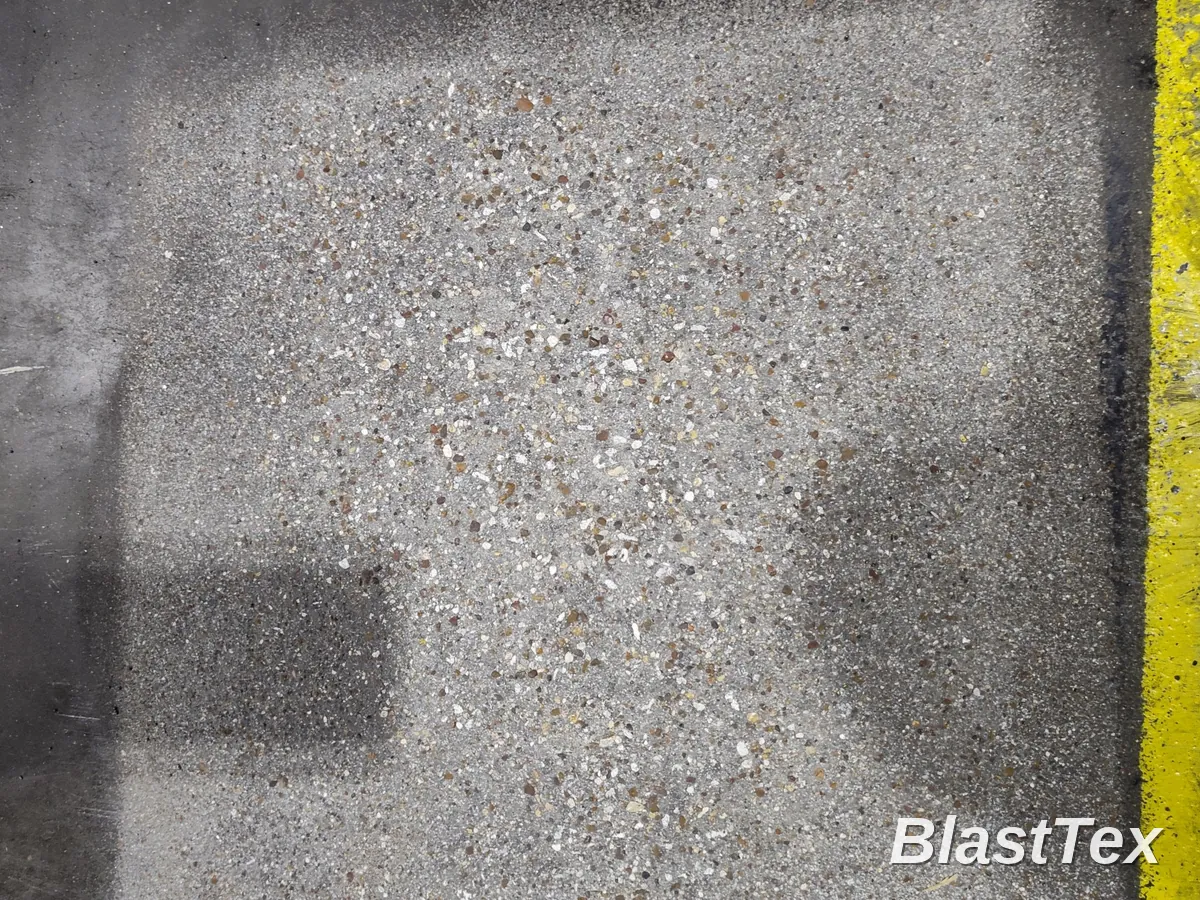
These ranges are a general guide. The coating manufacturer's product data sheet sets the profile your floor needs. Send it to us and we will prep to it.
3. What about oil and stains?
Concrete is full of tiny pores. Oil that sits for years wicks down into them, well below the surface. Shot blasting removes the top layer and anything on it, but it cannot pull out oil that has soaked deep into the slab. When that oil works back up, the coating over it can lose its bond.
If your floor has old, dark stains, send close-up photos. We will tell you candidly what blasting will and will not do before you commit. BlastTex does not offer chemical degreasing; when a floor needs it, a specialized cleaning company handles that step first.
4. Check moisture before you coat
Moisture coming up through a slab is a common cause of bubbling and peeling. Many coating manufacturers require a test first, such as an in-slab relative humidity test (ASTM F2170) or a calcium chloride test (ASTM F1869). Your coating installer or a testing company handles that. Ask about it before the coating is ordered.
5. Cracks, joints, and repairs
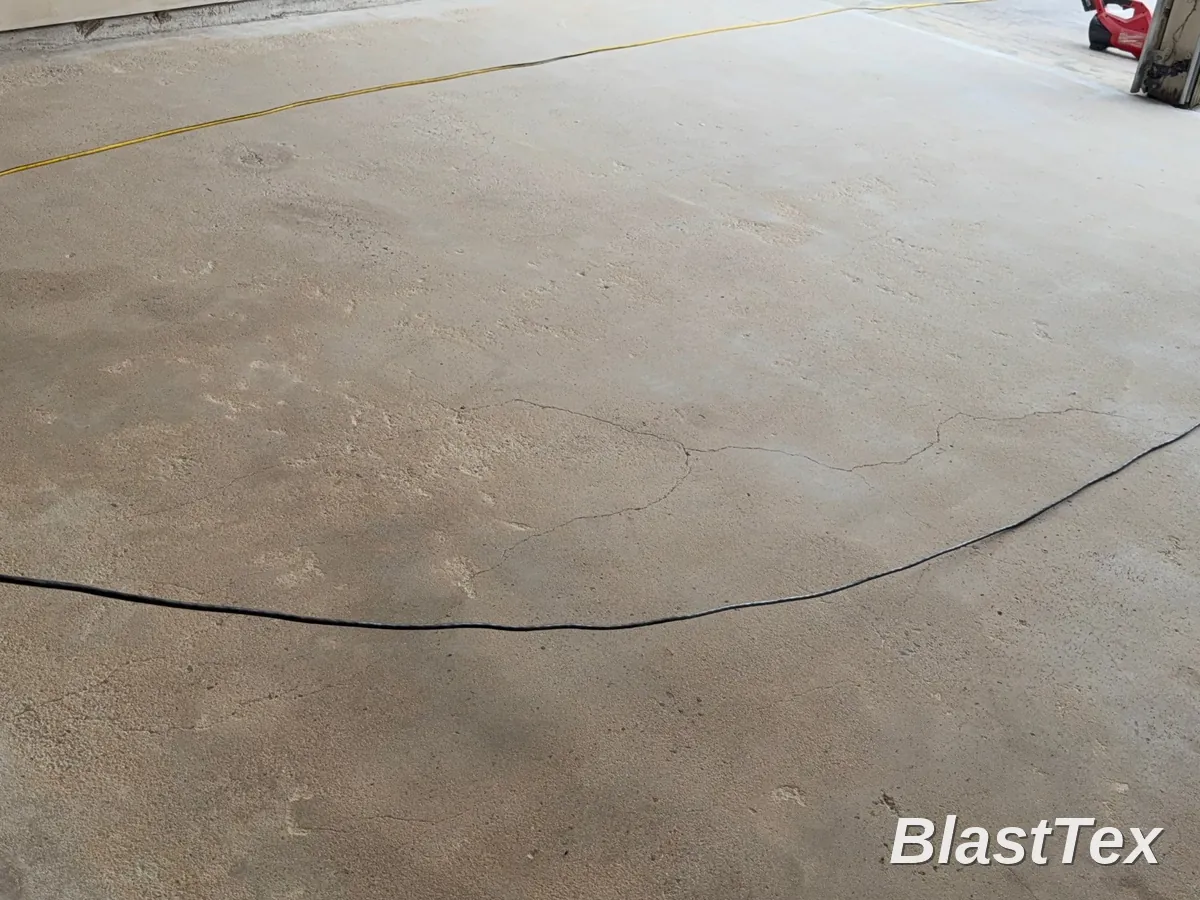
A coating will not hide a crack for long. Concrete moves, and cracks usually show back through. Crack and joint repair is handled by your coating installer or a concrete contractor. Shot blasting first gives the repair material a clean surface to bond to.
6. Shot blasting, grinding, or acid?
Shot blasting
- Removes coatings, sealers, and surface grime
- Leaves a uniform texture, fast on open floors
- Closed system with HEPA dust extraction
Grinding
- Good for edges, high spots, and small areas
- Usually a lighter, smoother profile
- Slower on large open floors
Acid etching
- Inexpensive, but inconsistent results
- Does not remove sealers, coatings, or oil
- Many manufacturers prefer mechanical prep
Dust matters too. Concrete dust contains silica, and OSHA regulates silica exposure on construction work under 29 CFR 1926.1153. Our blasters run with HEPA dust extraction to keep dust down. Your site's safety rules still apply.
Your pre-coating checklist
- Water-drop test done
- Old coatings and sealers identified
- Coating product data sheet in hand
- Required CSP known
- Moisture test planned with your installer
- Stains photographed and reviewed
- Cracks and joints planned for repair
- Floor cleared and ready for prep
Ready to proceed? Send your checklist and photos for a written proposal →
Coating or striping contractor?
BlastTex does not sell or install coatings, sealers, or striping, so we never compete with you for the work. Send us the product data sheet and the profile it calls for, and we prep to it on your schedule. Your client relationship remains yours.
Final acceptance of the floor stays with you as the installer. We document our work with time and date stamped photos so you have a record of the condition we left it in.
Bidding a project? Send the square footage and spec →
Prep questions
Can you guarantee my floor is ready for a coating?
We prepare to your written scope and the profile your coating’s data sheet calls for, and we photograph the finished floor. Moisture, oil that has penetrated deep into the slab and weak concrete can still affect a coating, and BlastTex does not test moisture, install coatings or warrant products installed by others. Your coating installer makes the final call that the floor is ready.
What surface profile (CSP) does my coating need?
Your coating's product data sheet lists it. As a general guide from the International Concrete Repair Institute (ICRI), thin sealers and coatings call for a light profile (about CSP 1 to 3), high-build epoxies and urethanes a medium profile (about CSP 3 to 5), and thicker overlays a heavier one. Always go by the manufacturer's sheet.
Can shot blasting remove oil stains?
It removes oil and grime on the surface. Oil that has soaked deep into the slab stays there, and a coating may not bond over it. We will tell you plainly what we see before you commit.
Is acid etching good enough?
Many coating manufacturers prefer mechanical prep such as shot blasting or grinding, because acid etching leaves a less consistent profile and does not remove sealers, coatings, or oil. Check your coating's data sheet.
Do you test the slab for moisture?
No. Moisture testing is done by your coating installer or a testing company. We can work on the schedule that testing requires.
Not sure your slab is ready?
Send photos, the location, approximate square footage and the coating you plan to use. We will tell you what the floor needs before anything gets coated.